
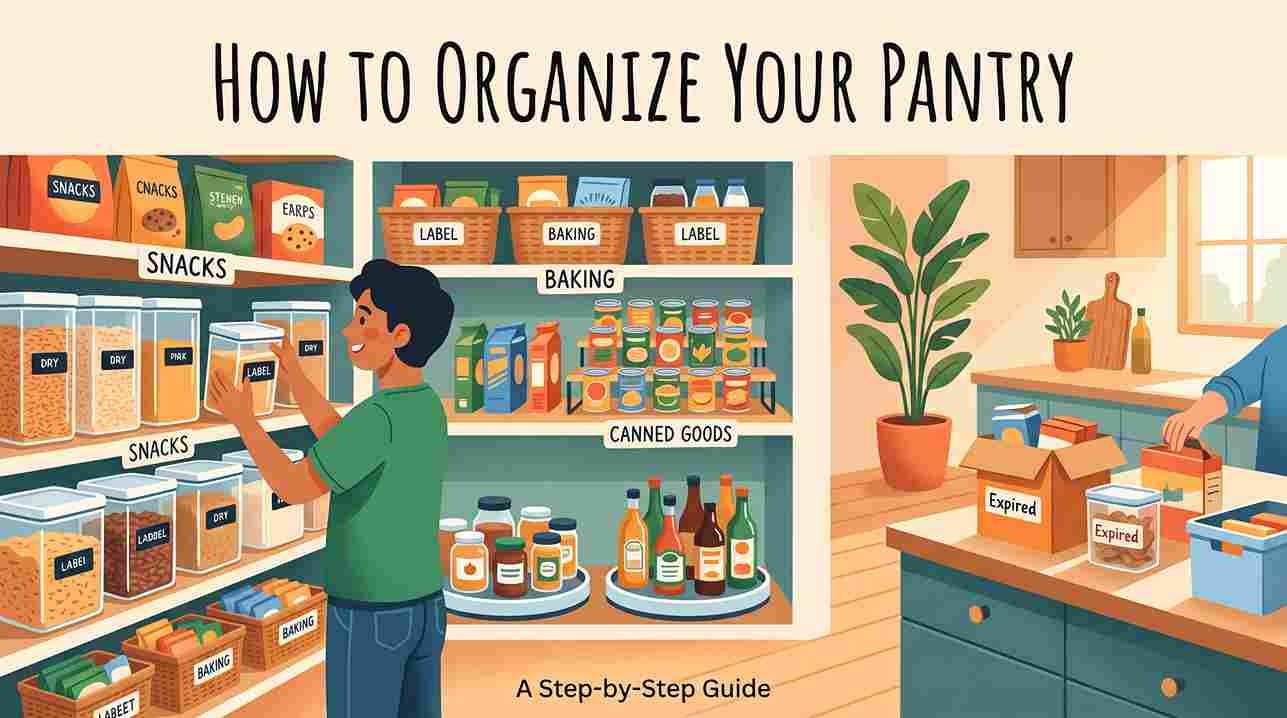
Have you ever noticed how things seem to vanish right in front of our eyes? They hide in plain sight. If you’ve ever paid attention to a pharmacy, a hospital supply room, or a supermarket, you’ll notice that everything is arranged following a very specific system. Because of this, anyone can find exactly what they’re looking for in an instant. I actually worked in a supermarket for a while, and it amazed me even as a total newbie, it took me mere milliseconds to understand where everything belonged.
The secret behind this is simple: a mix of psychology and discipline. That’s exactly why navigating those spaces feels so effortless. But when we fail to apply this same system at home, our daily lives remain cluttered. We can never seem to find what we need at the exact moment we need it. Instead, the item magically appears days later when it’s completely useless to us. Sometimes, our groceries play a game of hide-and-seek for months, only showing up when they have already expired and are only good for the trash can!
Anyway, we obviously aren’t going to store our spice boxes in the bedroom! But we can absolutely apply that same supermarket psychology to arrange everything perfectly right here in our kitchen. If you’ve been wondering how to organize a pantry so you can instantly find exactly what you need, exactly when you need it, let’s dive into the steps.
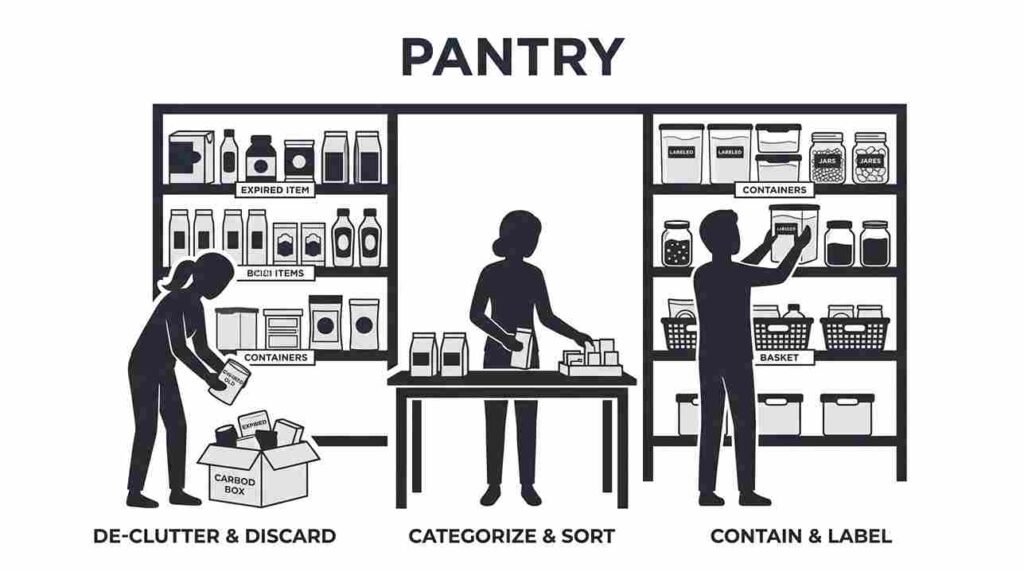
The Great Purge (Empty, Clean, and Declutter)
Back when I was working at a supermarket even though I was stationed at the POS counter. I always noticed the floor staff cleaning the shelves regularly, seemingly for no reason. While we don’t need to do that every single day at home, skipping a deep clean for two or three months just isn’t an option. After all, there will always be expired, stale, or damaged items hiding in the corners.
Empty Everything Out: First, you have to completely empty the space. Bring everything out.
Deep Clean: To properly declutter pantry spaces, you need a blank canvas. Once empty, wash and clean pantry shelves thoroughly. Feel free to use appropriate cleaning sprays or kitchen-safe chemicals to get them completely pristine and ready for restocking.
The Floor-Staging Trick: Here is where most people make a huge mistake during organizing. You put everything beautifully on the shelves, and then suddenly you find a stray item—but its designated category is already completely full! To avoid this frustration, temporarily arrange everything by category on the floor or a kitchen counter first. Only when everything is perfectly sorted should you finally move them up into the pantry.
Create Pantry Zones (Think Like a Grocery Store)
Now that you have everything on the floor, you need to follow some strict categorization rules. You wouldn’t put oil in the salt section, right? Nor would you keep honey in the sauce category. You must set up dedicated pantry zones based on the exact type of product.
- Group by Category: Categorize pantry food logically (e.g., baking supplies, spices, daily snacks, sauces).
- Maintain Visual Hierarchy: Once categories are set, arrange them smartly. Taller items should always go in the back so they don’t block the view of shorter jars.
- Respect the “Less Used” Items: Items you use very rarely can also be pushed to the back, but you must choose a spot where they don’t completely disappear. Don’t hide a small jar behind a giant box or stuff it into a dark corner where it might feel “offended” and completely forgotten! Just designate a specific, visible point for less frequently used items so they are there when you need them.
Maximize Your Space with Maximize Your Space with Smart Storage Tools
To keep our food fresh and properly protected, we need the right storage systems. Usually, we rely on boxes, jars, and bins. When choosing clear pantry containers, square-shaped ones are fantastic because they maximize every inch of your shelf space and look incredibly neat. However, there is a slight catch: round containers are generally easier to grab in a hurry. If you pack square containers too tightly, pulling one out can be a bit tricky.
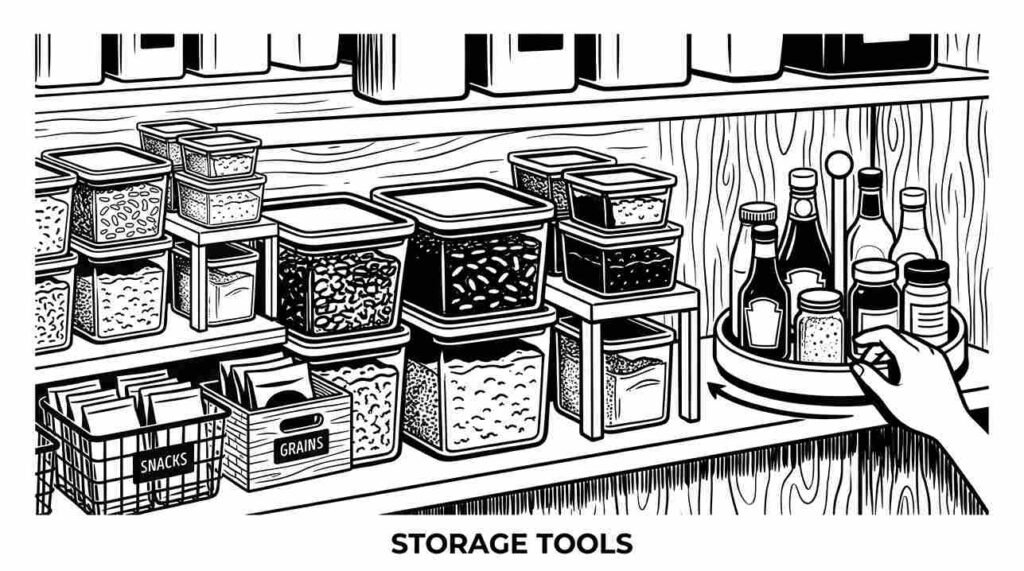
To solve this accessibility issue, you can use a lazy susan for pantry corners, allowing you to grab bottles or jars with just a quick spin. Additionally, incorporating tiered shelf risers for your canned goods ensures you are utilizing vertical space efficiently while keeping everything perfectly visible.
Arrange for Visibility and Accessibility
It is only natural that the items you need most frequently should be kept the closest (at eye level), while the less-used items can be placed further away or on higher shelves. How you arrange everything depends heavily on the type of products you are storing (feel free to explore our Pantry Category page to read specific posts on handling different items!).
The ultimate formula for a highly functional small pantry organization layout comes down to four things: maintaining strict categories, arranging by size, placing items based on daily need, and tracking expiration dates. In fact, items with a shorter expiration date should always be granted front-row priority even if they are used less frequently .so they are consumed before they go bad.
Label Everything (The Secret to Maintaining It)
When you start organizing, distinct items like honey, oil, and sauces naturally end up in their separate zones. However, many common cooking staples—like salt, baking soda, and various flours look almost exactly the same once they are out of their original packaging.
This is where high-quality pantry labels become essential. You can apply small, beautifully formatted labels to your jars featuring both the product name and its expiration date. In fact, all large commercial spaces and supermarkets rely heavily on strict labeling alongside categorization.
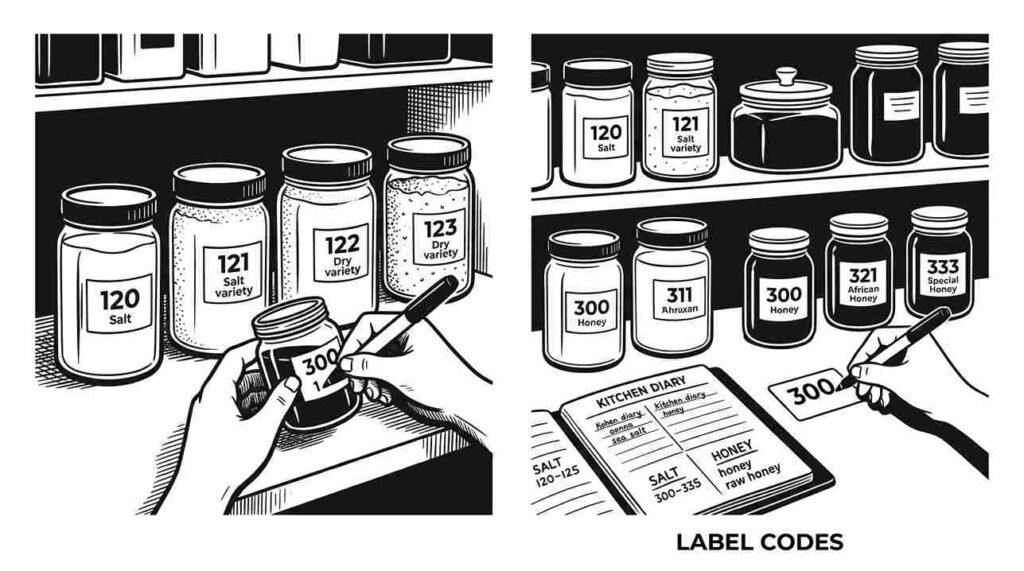
If you want a truly unique, minimalist approach to organize a pantry long-term, you can even try a smart numbering system! Keep a detailed index in a kitchen diary or a digital note app, and just write a numeric code on the container with a marker. Make the codes intuitive based on the category. For example, Salt could be 120, and salt-related items are 121, 122, and 123. Honey is 300, Local Honey is 321, African Honey is 311, and Special Honey is 333. By just looking at the first digit or two, you instantly understand the category and exactly what’s inside the jar!
Ready to Transform Your Kitchen?
Just like a supermarket or a hospital supply room, achieving the perfect space isn’t just a one-time project—it’s a habit. Now that you know exactly how to organize a pantry, don’t wait for the perfect moment. Take a couple of hours this weekend to pull everything out and start your own “great purge.”
Once you set up these logical zones, use the right containers, and apply a smart labeling system, maintaining your kitchen will take just a few minutes a week.
What is that one item taking up the most unnecessary space in your pantry right now? Let us know in the comments below!
How do I start organizing my kitchen pantry?
The best way to start organizing your kitchen pantry is by pulling everything out. This allows you to check expiration dates, discard old items, and clean the shelves thoroughly. Once empty, group your remaining items into clear categories before putting them back.
What is the most effective way to organize a pantry?
The most effective way to organize a pantry is to create specific zones (e.g., baking, snacks, canned goods), use clear containers for better visibility, and place frequently used items at eye level. Labeling everything also ensures the system stays organized long-term.
Are clear containers worth it for a pantry?
Yes! Clear pantry containers maximize space and allow you to see exactly how much of an item you have left, preventing you from overbuying at the grocery store. They are especially useful for staples like flour, rice, and cereal.
What is a butler’s pantry?
A butler’s pantry is a transitional space, usually located between a kitchen and a dining room. It is primarily used for storing fine china, serving dishes, and silverware, and sometimes serves as a staging area for preparing food or drinks before serving guests.
What is a pantry moth?
A pantry moth (also known as the Indian meal moth) is a common household pest that infests dry food goods. They lay eggs in stored items like flour, cereal, pasta, and grains.
How do I get rid of pantry moths quickly?
To get rid of pantry moths, immediately throw away all infested food items. Vacuum and deeply clean all pantry shelves, paying special attention to corners and crevices. Use airtight, clear containers for all your dry goods moving forward to prevent them from returning.